The Devil Is An Artistic Director

Adweek covers the promotion of Anna Wintour last week: ​

Powerful Vogue editor in chief Anna Wintour is expanding her role at Condé Nast. Today, the publisher announced that Wintour—who is also the editorial director of Teen Vogue—was named artistic director of Condé Nast. In the newly created role, Wintour will be responsible for "curating and cultivating the creative vision" for the company, according to a statement.
In an interview with The New York Times, Condé Nast CEO Chuck Townsend said that Wintour would be assuming some of the responsibilities left open by Si Newhouse, the 85-year-old chairman of Condé Nast parent Advance Publications, when he scaled back his role, including oversight of Condé Nast's editorial division, last fall. "Si Newhouse leaves a void, inevitably," Townsend told the Times. "Anna, without even having to think twice about it, is the most qualified person to pick up that torch and carry it into the future."
Townsend added that the role of artistic director had been created, in part, to keep Wintour at Condé Nast, telling the Times that he "would go to great distances to avoid losing Anna, particularly in the prime of her career." Wintour had been rumored last year to be a possible Obama administration appointee to the U.K. ambassadorship, but she maintained that she had no plans outside of Condé Nast.

I find Wintour to be truly fascinating. While everyone is discussing the death of publishing as we know it she secures herself an even bigger position of leadership at Condé Nast​. At this moment it's not clear what this new position really means for publications like Wired, Epicurious or The New Yorker and I can not help but find myself very curious to see how her obvious influence will extend beyond the world of fashion. 

​In conversations I often compare Wintour to Steve Jobs. Most of us were willing to dismiss his most demanding character traits while acknowledging that he was a visionary genius, and yet similar behavior and success from Wintour results in her being branded a Prada-wearing devil. 

I gained a better understanding of who Wintour is from a film, not that one, the other one. The R.J. Cutler directed documentary The September Issue (available for streaming in the usual places.)​ Cutler spent eight months following Wintour and filming over three hundred hours of footage. 

While making The September Issue, I observed Anna Wintour day-in and day-out as she single-handedly commanded the $300-billion global fashion industry. In a business where last week's fashion shows are already old news, she has been at the top of her field (and the top of her game) for two decades and counting. Shortly after we began filming, I observed to a friend who asked what it was like to watch Anna work, "Well, you can make a film in Hollywood without Steven Spielberg's blessing, and you can publish software in Silicon Valley without Bill Gates' blessing, but it's pretty clear to me that you can't succeed in the fashion industry without Anna Wintour's blessing."

Cutler even learned four lessons in management by watching Wintour work. 

Another reason to watch the documentary is to discover Grace Coddington. Every influential public figure always has a behind-the-scenes person who is equally, if quietly, influential to the work. 

Watch the above trailer for the documentary. At around the 2:00 mark there is a moment that resonated with me when I watched the film and that I confess I've stolen. ​In many meetings over the past few years I've been known to paraphrase her and demand "where is the quality?, where is the elegance?, where is the follow through? Come on, elevate it."

​If God is in the details, so is the Devil and she is an Artistic Director.


/Source

Antonio Ortiz

Antonio Ortiz has always been an autodidact with an eclectic array of interests. Fascinated with technology, advertising and culture he has forged a career that combines them all. In 1991 Antonio developed one of the very first websites to market the arts. It was text based, only available to computer scientists, and increased attendance to the Rutgers Arts Center where he had truly begun his professional career. Since then Antonio has been an early adopter and innovator merging technology and marketing with his passion for art, culture and entertainment. For a more in-depth look at those passions, visit SmarterCreativity.com.

The Real Work Of Writing: Elizabeth Gilbert Takes On Philip Roth

In fact, I'm going to go out on a limb here and share a little secret about the writing life that nobody likes to admit: Compared to almost every other occupation on earth, it's f*cking great. I say this as somebody who spent years earning exactly zero dollars for my writing (while waiting tables, like Mr. Tepper) and who now makes many dollars at it. But zero dollars or many dollars, I can honestly say it's the best life there is, because you get to live within the realm of your own mind, and that is a profoundly rare human privilege. What's more, you have no boss to speak of. You're not exposed to any sexual abuse or toxic chemicals on the job site (unless you're sexually abusing yourself, or eating Doritos while you type). You don't have to wear a nametag, and--unless you are exceptionally clumsy--you rarely run the risk of cutting off your hand in the machinery. Writing, I tell you, has everything to recommend it over real work.

As I have mentioned before I didn't discover Elizabeth Gilbert through her books, but rather through TED. I find her to be charming and witty in a way that motivates. In an essay for the wonderful Bookish site, quoted above, she takes Philip Roth to task for telling a newly published author who was waiting on him (Mr. Tepper above) the following: 

"I would quit while you're ahead. Really. It's an awful field. Just torture. Awful. You write and you write, and you have to throw almost all of it away because it's not any good. I would say just stop now. You don't want to do this to yourself. That's my advice to you."
/Source

Antonio Ortiz

Antonio Ortiz has always been an autodidact with an eclectic array of interests. Fascinated with technology, advertising and culture he has forged a career that combines them all. In 1991 Antonio developed one of the very first websites to market the arts. It was text based, only available to computer scientists, and increased attendance to the Rutgers Arts Center where he had truly begun his professional career. Since then Antonio has been an early adopter and innovator merging technology and marketing with his passion for art, culture and entertainment. For a more in-depth look at those passions, visit SmarterCreativity.com.

Learning to code is learning to think. Kids should learn programming.

And that is exactly what Code.org is trying to do. Code.org is a non-profit foundation dedicated to growing computer programming education, visit their site to learn how you can help. 

And to those of you that already know programming, here is a perfect complement, HackDesign, design lessons for programmers. ​

Antonio Ortiz

Antonio Ortiz has always been an autodidact with an eclectic array of interests. Fascinated with technology, advertising and culture he has forged a career that combines them all. In 1991 Antonio developed one of the very first websites to market the arts. It was text based, only available to computer scientists, and increased attendance to the Rutgers Arts Center where he had truly begun his professional career. Since then Antonio has been an early adopter and innovator merging technology and marketing with his passion for art, culture and entertainment. For a more in-depth look at those passions, visit SmarterCreativity.com.

Humble

Antonio Ortiz

Antonio Ortiz has always been an autodidact with an eclectic array of interests. Fascinated with technology, advertising and culture he has forged a career that combines them all. In 1991 Antonio developed one of the very first websites to market the arts. It was text based, only available to computer scientists, and increased attendance to the Rutgers Arts Center where he had truly begun his professional career. Since then Antonio has been an early adopter and innovator merging technology and marketing with his passion for art, culture and entertainment. For a more in-depth look at those passions, visit SmarterCreativity.com.

Storytelling Across Platforms: J.J. Abrams And Gabe Newell

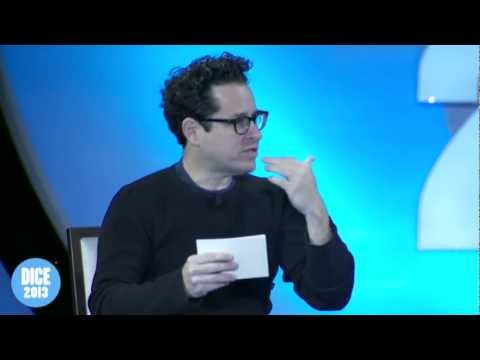
In a fun back-and-forth conversation two of my favorite producers, J.J. Abrams, film and Gabe Newell, games, give the keynote speech at the 2013 D.I.C.E. SUMMIT and discuss how different platforms change storytelling. 

Antonio Ortiz

Antonio Ortiz has always been an autodidact with an eclectic array of interests. Fascinated with technology, advertising and culture he has forged a career that combines them all. In 1991 Antonio developed one of the very first websites to market the arts. It was text based, only available to computer scientists, and increased attendance to the Rutgers Arts Center where he had truly begun his professional career. Since then Antonio has been an early adopter and innovator merging technology and marketing with his passion for art, culture and entertainment. For a more in-depth look at those passions, visit SmarterCreativity.com.